How often do you weight yourself? Is it monthly, weekly, daily, or hardly ever? Up until this past month, I weighed myself about once every month or so. Not very often and really more to just see where I was at. I feel happier that way. However, for the past 28 days I weighed myself everyday to do a little experiment. Let me tell you what I found:
1. I hate the scale. It’s not because I’m scared of what it will say but more about the mental games it plays on me.
2. It changes so much! On a day to day basis I went between 1-2pound changes.
3. I realized how much pressure I can put on the scale to tell me what I want to see and feel so defeated when it doesn’t.
4. The scale and the way my clothes fit don’t always line up.
5. I won’t ever weigh myself daily again! Not ever!
So, let’s get to the reason behind this experiment and what it taught me. I get messages on a weekly basis about the scale. What should I weigh? How do I lose weight? Why isn’t the scale moving, when I workout so hard? These are all questions that people ask a lot! I get it! You put work into losing weight, working out, and doing your best to be consistent, but sometimes the scale doesn’t budge. How can that be? I wanted to show people how inconsistent the scale can be.
The scale is a tool. It can be helpful and show you patterns, BUT it does NOT tell the whole story. It does not tell you if you gained muscle. It does not tell you if you are retaining water. It does not tell you if your bowels need to be emptied. It just tells you a number. That’s it! That number can be based on so many things, and yet we tend to live our lives stressing about it. What will it tell me today? Will I be happy or sad?
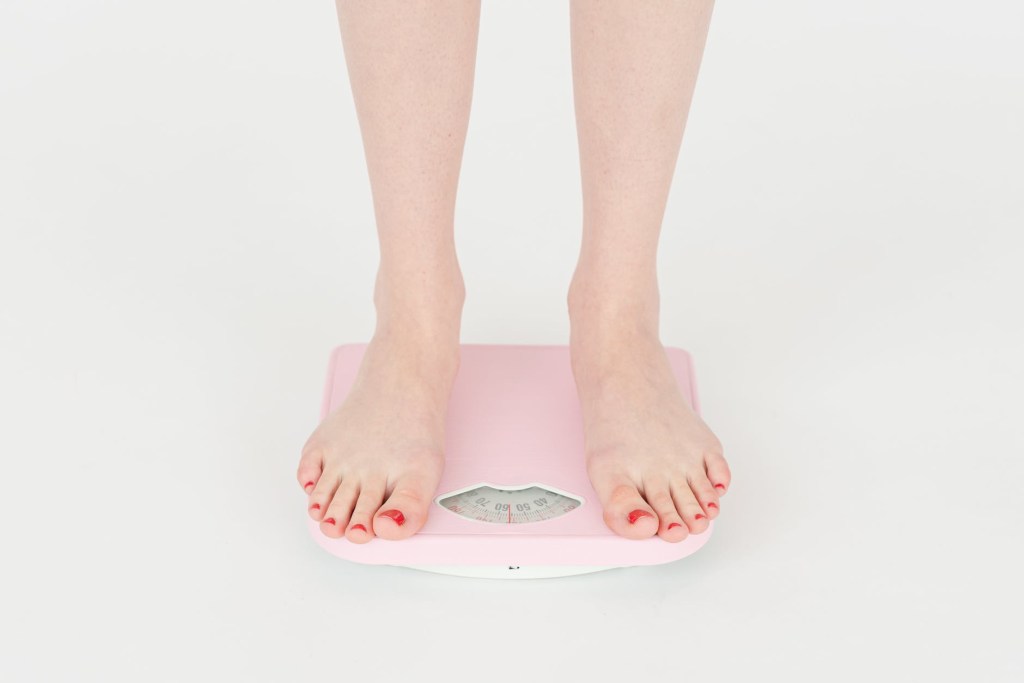
I wanted to weigh myself everyday for one month to show you how much it can change on a day to day basis. In order to lose one pound of fat, you need to burn an extra 500 calories per day or 3,500 calories in a week. You need to be in a calorie deficit. To gain one pound of fat, you need to consume an extra 3,500 calories in a week or 500 per day putting you in a caloric surplus. On a day to day basis I did not consume an extra 500 calories or be in a caloric deficit of 500 calories, but the scale says I was.
Here is how my weight fluctuated from day to day:
Day 1: 139
Day 2: 138.4
Day 3: 137.6
Day 4: 137.8
Day 5: 138.6
Day 6: 137.8
Day 7: 137.2
Day 8: 138.2
Day 9: 138.8
Day 10: 138.2
Day 11: 138
Day 12: 137.8
Day 13: 138.4 (feeling bloated)
Day 14: 138.6 (feeling bloated)
Day 15: 139.2 (bloated, cramps)
Day 16: 138.8 (bloated, cramps)
Day 17: 138.4
Day 18: 138.4 (period started)
Day 19: 138.8
Day 20: 139.4
Day 21: 139.4 (period ended)
Day 22: 138.4
Day 23: 137.8
Day 24: 138
Day 25: 138.2
Day 27: 138.2
Day 28: 138
I also tracked my period and symptoms leading up to it to monitor what the scale said and how I was feeling. If you look through the numbers from day to day, I ranged between 137-139 lbs. I did not lose or gain fat from one day to the next. I actually tracked my calories and macros for the first 5 days, and I stayed in my range, so the changes in the scale were likely from other things. If I had just weighed myself once or twice in that month, I would likely see that I was down 1-2 lbs.
So what can cause the scale to fluctuate? Here are some common things that can change the number on the scale: when your last bowel movement was, if you are retaining water, if your muscles are sore from a hard workout, you had more salt the previous day, your hormones, and higher carbs the day before. Those things don’t necessarily mean that you gained body fat.

When we use the scale, we need to use it as a piece of information and not as something that defines us. Does it show is a trend? Are we consistently gaining or losing weight? How does that information relate to how you feel or look? Do your clothes fit differently? Do you see more muscle definition? Have your measurements changed? We need to collect information from more than one source.
In the past year, I have gained 8 lbs. That was hard to swallow at first. But then I had to look at other things like seeing more muscle definition in my body, having more endurance, feeling more powerful, and still wearing the sane size clothing. How much does that 8 lbs matter? I lift heavier then I did last year, I feel stronger and more mobile then last year, and I feel motivated to keep working hard. Did I gain more body fat with lean muscle mass? Maybe 🤷♀️. But I definitely gained muscle and strength.

So friends, don’t let the scale dictate how you feel about yourself. Use it as a piece of information you collect along side other factors. Use it as a way to monitor progress without letting it define you. Use is occasionally knowing that it tells you a number and not the whole story. Let’s focus on how we feel, how strong we are becoming, and how our clothes fit more than what the number on the scale says.


Leave a Reply